Acute Coronary Syndrome: An Evidence-Based Review and Practical Prehospital and Hospital Management Guideline
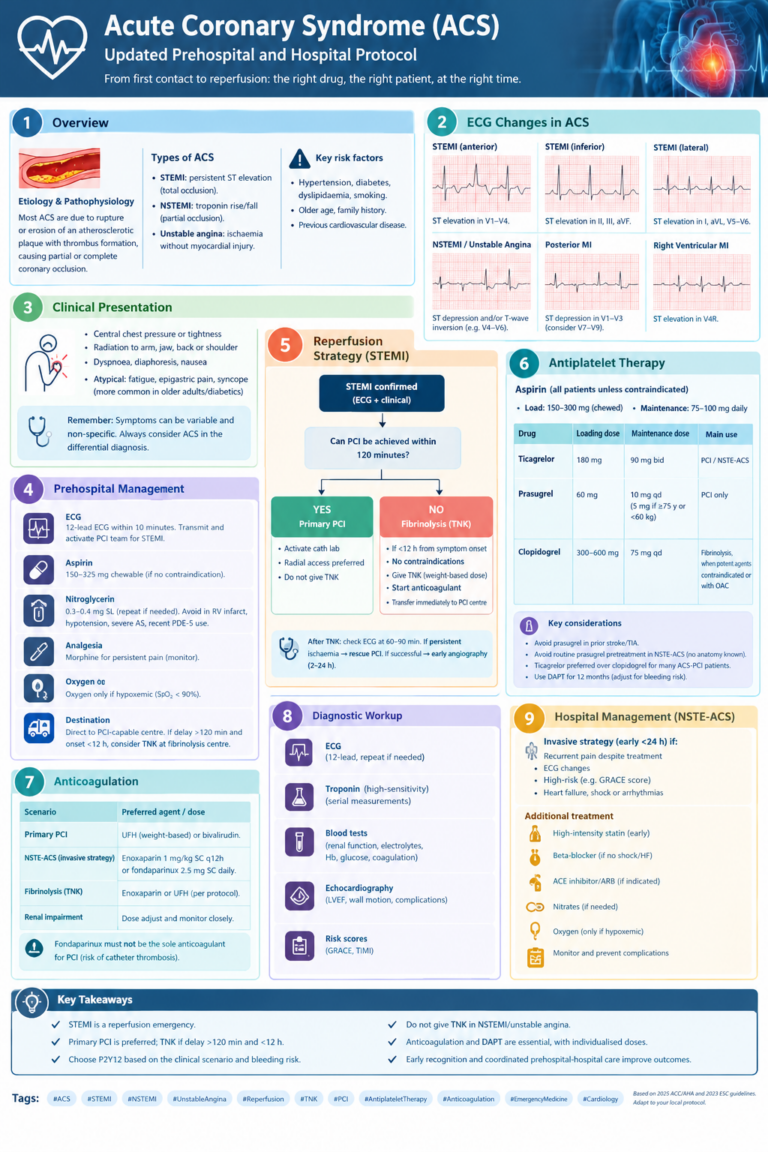
Acute coronary syndrome (ACS) remains one of the most time-critical challenges in emergency medicine. From the first chest pain call to the catheterisation laboratory, recognising myocardial ischaemia early and choosing the right treatment at the right time can make the difference between myocardial salvage and irreversible injury.
But ACS is not always textbook. The ECG may reveal dramatic ST elevation—or subtle changes hiding a life-threatening coronary occlusion. A normal initial tracing does not rule it out, and the absence of ST elevation does not mean the absence of danger.
In this review, we explore the ECG patterns of different myocardial infarction territories, the diagnostic pitfalls that can delay treatment, and the latest evidence-based approaches to prehospital and hospital management. From antiplatelet therapy and anticoagulation to primary PCI and fibrinolysis, the aim is practical: turn clinical evidence into timely decisions when every minute counts.